

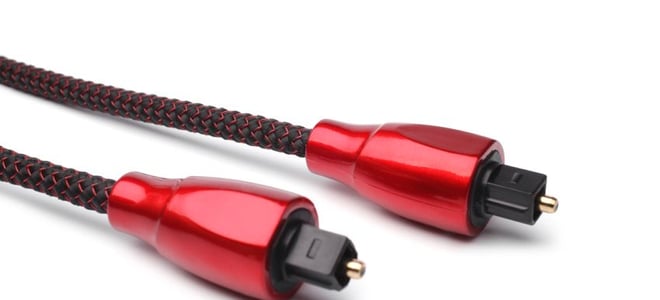
Optical cable is quickly overtaking the world by a storm in the tech industry. Modern WiFi connections, cable TV, and even CCT utilize optical cables. However, it is often overlooked in the realm of audio performance. Despite the excellent performance and high-quality audio capabilities, TOSLINK (the optical cable for audio) is not favoured as much as aux and other conventional audio cables. Yet, they can create new buzz in the tech industry.
Let’s take a better look at how Optical Audio cable can provide a perfect revolution:
The Signature Plug & Play
Most audio cables have the ability for you to just plug and play. They don’t require any additional setup, except for the professional equipment. Once you calibrate anything professionally, it stays that way. The same level of ease of use is seen in the optical cable. Despite the technological advancement, they maintain the plug & play convenience for the users.
The Unparalleled Sound Clarity
There are many audio cables with copper wiring, silver plating, and even gold plating. Yet, they all have the tendency to wither away with time, rust and corrode even if they maintain longevity. With that comes the degradation of the audio signal.
No such decline is seen in the optical cables, especially due to their glass or plastic construction. Moreover, as they are part of the digital audio system, they also transmit data faster. The light pulses enable quick transmission that maintains a high quality of sound at a fast pace. Thus, you don’t feel any lag or decline in quality, and receive the authentic sound coming from the source. Hence, it improves the overall immersive experience.
Uninterruptable Performance Capabilities
Most wires, including modern auxiliary cables, can face interference. These interference primarily appear with electromagnetic and radio frequencies. In the modern age, we have too many gadgets and it becomes easy to get interference. It piles up and it is primarily seen with Bluetooth connectivity. Even AUX and other cables can find distortion or disturbance. However, optical cables use light signals and transmit at the light speed. It reduces any form of interference and noise. Thus, you receive flawless performance.
Enhanced Compatibility And Improved Versatility
Optical cables are continually finding ways to make new contributions to a wide range of industries. However, it has existed for a long time in the audio industry. It has found utility in a wide range of audio devices, like Blu-Ray players, Soundbars, and high-end home theatres that utilize optical cables. AV receivers of various gadgets have also started supporting it.
Moreover, with the increase in the trend of gaming, many professional players prefer optical cable connectivity for zero latency and interruption with phenomenal sound clarity. Optical cables are universally compatible to most audio devices and don’t require any extra support or features. If needed, you can use various adapters and converters available in the market to utilize optical cables.
A Future-Proof Investment
We live in the age of high-resolution sound. Dolby Digital, Atmos, DTS, PCM and many other high-res sound solutions and codecs are becoming prevalent. To maintain the sound quality, immersive surround sound, crisp clarity for gaming and more, optical cables are becoming a necessity. With more devices adapting to the optical cable, it is becoming a future-proof investment. Much like Aux, which has dominated the industry for a long time, it is quite possible that optical cables will also maintain similar dominance.
Join the Optical Audio Revolution:
There are still some modifications and maintenance, especially for the durability of the optical cables, required for the full-fledged enhancements. However, there’s no doubt that optical audio cables are the sound of the future. They will soon become a staple, much like auxiliary cables.
Comments are closed.